 Business License
Are polyolefin hot-melt adhesives resistant to citrus oil?
Polyolefin (PO/APAO/Metallocene POE) Hot-Melt Adhesives: Complete Conclusions on Resistance to Citrus Oil (D-Limonene)
I. Key Comparative Conclusions
Polyolefin hot-melt adhesives exhibit far superior inherent resistance to citrus oil compared to EVA hot-melt adhesives and are the mainstream type of limonene-resistant adhesives on the market
EVA Hot-Melt Adhesives: Completely incompatible with citrus oil
The polar vinyl acetate (VA) segments are highly susceptible to penetration and swelling by D-limonene. After immersion, they turn white, soften, delaminate, and experience a significant drop in adhesive strength; they are generally prohibited for use in food packaging and filters where resistance to orange oil is required.
Polyolefin Hot-Melt Adhesives (APAO / Metallocene POE Systems): Basic resistance to citrus oil
The molecules consist entirely of nonpolar hydrocarbon chains, which have poor compatibility with terpenes like limonene. They are not easily swollen or dissolved by solvents, making them the preferred substrate for customer-requested citrus oil resistance testing.
II. Oil Resistance Performance by Type
1. APAO Amorphous Poly-α-olefin (General-Purpose Polyolefin Hot-Melt Adhesive)
24/48-hour immersion in pure limonene at room temperature: No whitening, no melting, no noticeable swelling;
Weakness: If the formulation contains a large amount of terpenoid tackifying resins, resistance to citrus oils decreases, and the material may become slightly soft;
Qualified Formulation: When combined with aliphatic C5 hydrogenated resin, it offers optimal resistance to limonene.
2. Metallocene POE / Vistamax-modified polyolefins (for high-end filters / food packaging)
Offers the strongest resistance to citrus oil and high cohesive strength. Bond strength shows minimal decline after accelerated immersion at high temperatures (40–50°C), making it suitable for long-term exposure to orange-scented cleaners and food-grade citrus essential oils. It is also the mainstream oil-resistant system for filter adhesives.
3. Standard Modified Polyolefins (Low-Cost Filled Variants)
Heavily filled with calcium carbonate and paraffin wax, or blended with EVA to reduce costs, these products exhibit significantly poorer resistance to citrus oil and are prone to delamination and a sharp drop in adhesive strength after soaking.
III. Key Formulation Factors Affecting Polyolefin Resistance to Citrus Oil (Essential Reference for Filter Adhesive Development)
Selection of Thickening Resins (Most Critical)
✅ Preferred for oil resistance: hydrogenated C5 aliphatic resins, hydrogenated DCPD resins
❌ Not oil-resistant: standard terpenic resins, terphenol resins (derived from limonene, which is easily leached by orange oil)
Minimize Polar Additives
Limiting the addition of EVA, rosin, and polar lubricants will significantly reduce resistance to limonene permeation.
The Higher the Polymer Content, the Better
A main resin content of ≥60% high-molecular-weight POE/APAO provides stronger oil resistance and cohesion; formulations with low resin content and high filler content have poor oil resistance.
IV. Distinguishing Based on Actual Test Results
Qualified Polyolefin Adhesives Resistant to Citrus Oil (Filter / Food Packaging Standards)
Soaked in pure D-limonene at 23°C for 72 hours:
No whitening, bubbling, oil seepage, or stickiness in the adhesive layer;
Bond strength decrease ≤15%;
Weight increase due to swelling <5%.
Substandard polyolefin formulations (containing terpenes/EVA)
After immersion: The adhesive surface becomes tacky, shows slight swelling, and the interface separates when peeled off, with tensile strength halved immediately.
V. Practical Industry Summary (Tailored to Your Filter Adhesive Business)
When customers require citrus oil resistance testing: Prioritize metallocene POE + hydrogenated C5 resin polyolefin hot-melt adhesives, which consistently pass the test;
Standard EVA adhesives fail to meet the requirements outright and cannot be used in applications involving contact with orange oil;
For low-cost APAO adhesives, the amount of terpenes added must be strictly controlled; otherwise, they are likely to fail accelerated high-temperature testing;
If customers require both engine oil resistance and orange oil resistance, polyolefin hot-melt adhesives offer superior overall performance compared to standard EVA and SIS.
Recently Posted
-
Polyolefin (PO) Filter Hot-Melt Adhesive Technical Specifications
July 11, 20261 Scope of ApplicationThis specification applies to polyolefin-based hot-melt adhesive pellets used for sealing the edges of air f Read More
 -
Metallocene Polyolefin Hot-Melt Adhesive Manufacturer Primarily produces adhesives for cardboard bo
July 11, 2026Metallocene Polyolefin Hot-Melt Adhesive Manufacturer Specializes in producing adhesives for cardboard boxes, paper boxes, s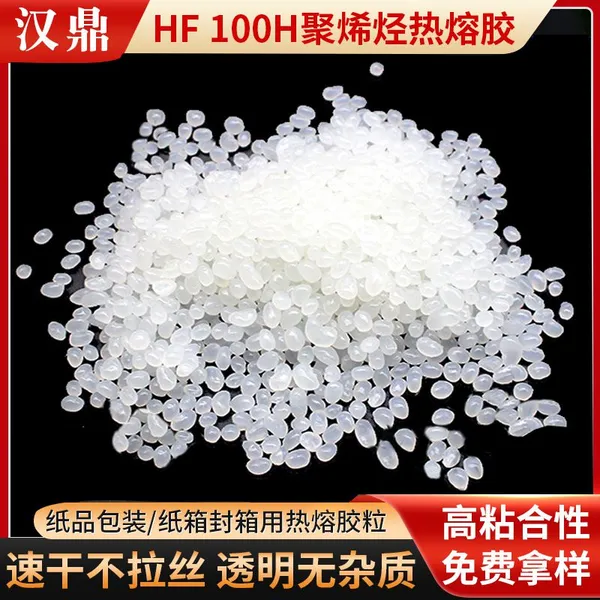 Read More

Contact Us
Recommended Products
-
 Eco-Friendly Polyolefin Hot Melt Adhesive Granules for Carton Sealing | High Purity & High Viscosity Machine-Specific GlueUS$ 2.9 - 3.2MOQ: 100 Kilograms
 -
Metallocene Polyolefin Hot-Melt Adhesive—Dries Instantly; Adhesive for Packaging and Paper ProductsUS$ 3.2MOQ: 1000 Bags
-
Polyolefin Hot Melt Adhesive, Guangzhou Manufacturer, Wholesale, Special Adhesive for Paper Packaging, High Viscosity, no Stringing, no ImpuritiesUS$ 3.3 - 3.4MOQ: 1000 Kilograms